Overview
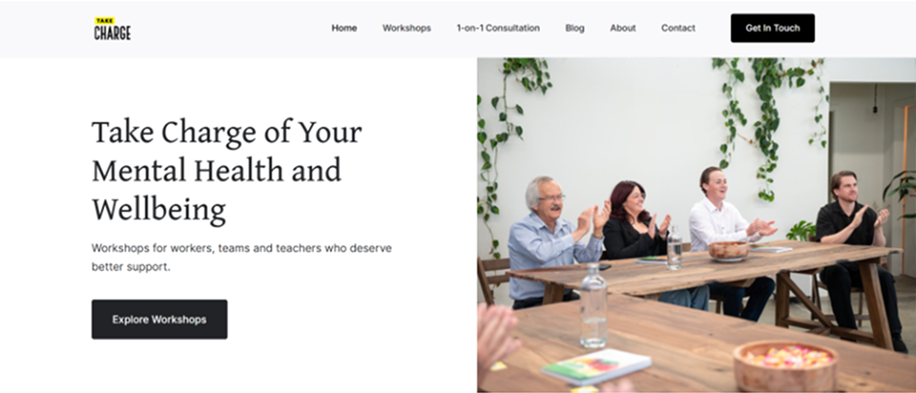
This project was completed as part of my internship, undertaken to meet the unit credit requirements for my Master of Commerce degree. Its objective was to redesign Take Charge Wellbeing’s outdated and unstructured website, transforming it into a modern, user-friendly website that clearly communicates the organisation’s offerings and effectively drives lead enquiries.
🧑‍💼 Client Overview
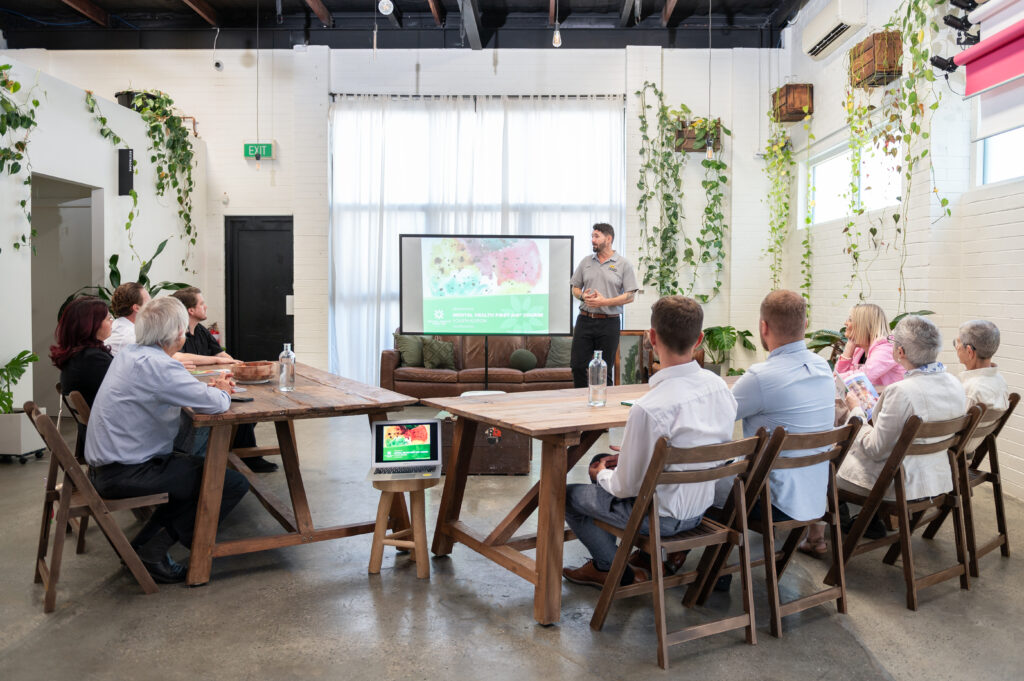
Take Charge Wellbeing is a Perth-based mental health and wellbeing consultancy founded by Darren Peterson. It delivers interactive, evidence-based workshops to blue-collar and white-collar workers, as well as educators, to improve mental health, resilience, and workplace wellbeing. Their clients include industry leaders such as Rio Tinto, BHP, NAB, and local councils.Â
đź§Ş Process & Approach
- Research & Discovery: Reviewed the existing website to identify usability and content issues, analysed competitor websites for industry best practices, created a design moodboard, and selected an appropriate WordPress theme.
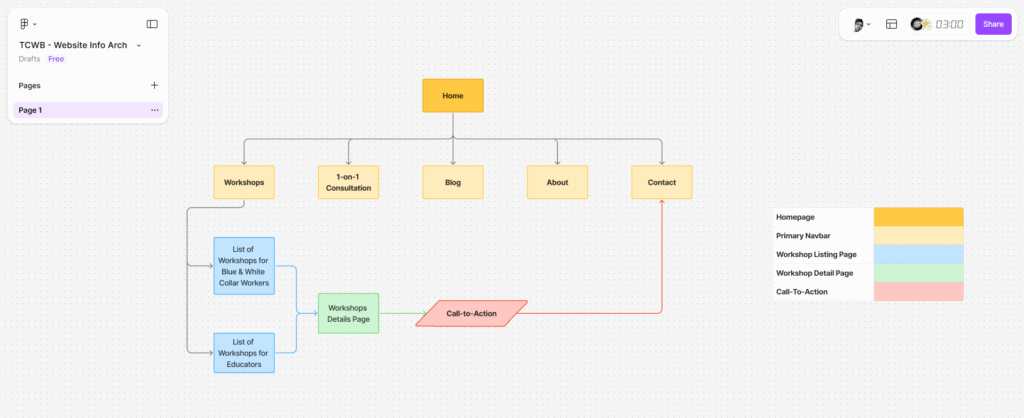
- Information Architecture: Developed a clear sitemap and navigation structure to group workshops logically and reduce clicks to key content.
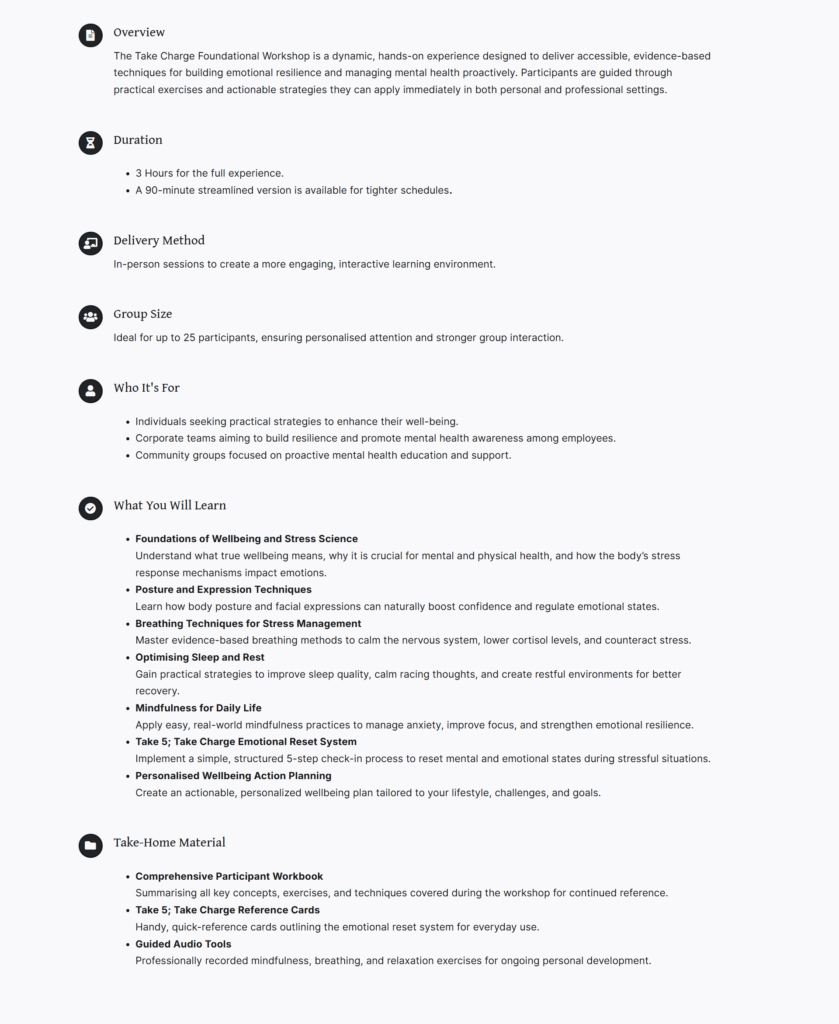
- Content Strategy: Rewrote workshop descriptions using clear, accessible language and applied a consistent structure to ensure uniformity across all offerings.
- Design & Development: Customised WordPress theme, optimised for mobile responsiveness, and integrated brand-aligned visuals.
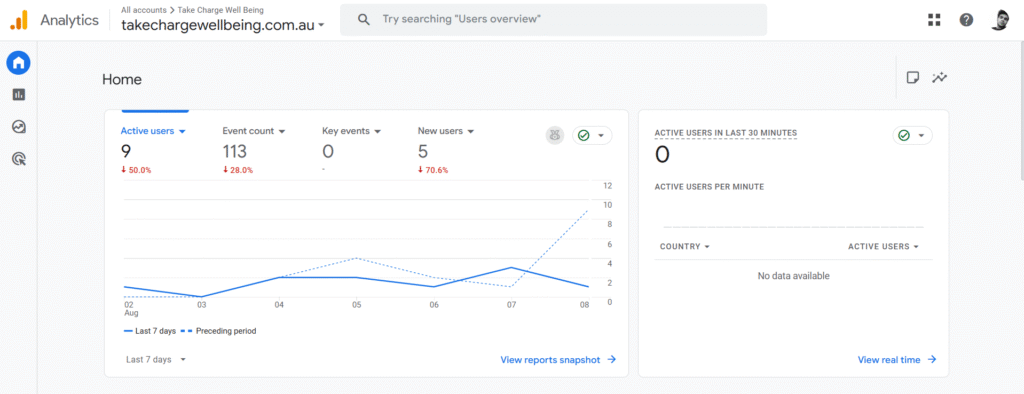
- Analytics Integration: Installed Google Analytics to track user behaviour, measure conversions, and generate actionable insights.
- Testing & Launch:Â Conducted pre-launch testing across devices, identified and resolved responsiveness and content issues before final deployment.
- Handover & Documentation: Delivered a content update guide for ongoing site management without technical expertise.
đź’» Tools Used
1. Research & Discovery
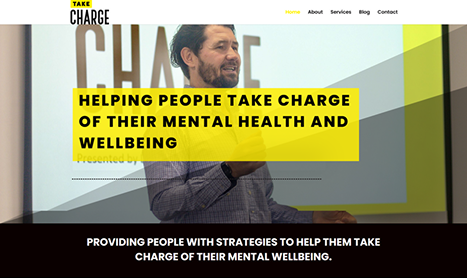
Existing Website Issues:
Click here to view the existing website.
Outdated and unprofessional visual design
Unclear navigation with generic menu labels
Scattered workshop information, hard to locate
Weak or missing calls-to-action on key pages
No analytics or tracking for user behaviour
Limited mobile optimisation and responsiveness.
Competitor Design Moodboard
2. Information Architecture
The new information architecture simplified navigation, grouped workshops by audience, and connected each workshop page to a clear call-to-action. This structure reduces friction, shortens the path to enquiry, and makes it easier for visitors to move from browsing to taking action.
3. Content Strategy
The website copy was fully restructured to be consistent, descriptive, and easy to navigate. Workshop pages now follow a uniform format, starting with a clear overview, followed by key details such as duration, delivery method, audience, and learning outcomes. Each section uses plain, jargon-free language while highlighting tangible benefits. Supporting pages like About and Contact were rewritten to align with the brand’s approachable yet professional tone. Calls-to-action were strategically placed throughout to guide users toward making an enquiry, and trust-building elements such as client logos, testimonials, and accreditation details were incorporated to enhance credibility.
4. Design & Development
The new website was built using the Avada multipurpose WordPress theme. It has a clean, minimal, well-structured design with descriptive information on Take Charge Wellbeing’s workshops. Click here to view the full website.
5. Analytics Integration
Google Analytics was implemented to track user interactions, including page views, CTA clicks, and form submissions, providing data to measure the effectiveness of the redesign.
6. Test & Launch
Before launch, Darren and I conducted an in-depth review of the site over a long Google Meet session. We went through each page and section one-by-one, identifying areas for improvement in layout, copy, and functionality. Real-time changes were made during the call, ensuring the design, content, and navigation met both user needs and business objectives. This collaborative approach allowed for quick decision-making, resulting in a polished, fully functional site that was ready to go live without major post-launch fixes.
7. Handover & Documentation
After launch, I provided Darren with full access to the WordPress dashboard along with a step-by-step PDF guide created using Scribe. This documentation clearly outlined how to edit workshop details on the website, complete with annotated screenshots for each step. This ensured Darren could independently update content in the future without requiring technical assistance, supporting the site’s long-term maintainability.
🏆 Final Outcome
The redesigned website elevated Take Charge Wellbeing’s digital presence, making it visually appealing, structurally organised, and purpose-driven. Visitors can now easily explore workshops, understand their benefits, and submit enquiries without confusion or unnecessary clicks. The improved structure and copy have strengthened the brand’s professionalism and credibility, while the integration of analytics tools enables data-driven decisions for continuous improvement. Most importantly, the client now has the autonomy and resources to manage the site confidently, ensuring it remains a valuable asset for attracting and converting leads well into the future.
đź§ What I Learned
 This project sharpened a range of professional skills. On the technical side, I deepened my expertise in WordPress customisation, responsive design, and content structuring, while also learning to integrate and configure analytics tools like GA4 for actionable insights. From a client management perspective, I gained experience in conducting needs assessments, presenting solutions, and iterating designs based on feedback during live review sessions. I also learned to translate client requirements into practical, user-focused website features, communicate progress clearly, and deliver training documentation to empower the client post-launch. Overall, I developed stronger problem-solving, collaboration, and stakeholder communication skills that will be invaluable in future client-facing projects.